Graphing quadratic equations is a fundamental skill in algebra, enabling students to visualize and analyze the behavior of quadratic functions. This skill is crucial for understanding more complex mathematical concepts and has numerous applications in physics, engineering, and other fields. However, mastering quadratic graphs can be challenging, especially for students who are new to algebra. The key to overcoming these challenges lies in practice and a deep understanding of the different forms of quadratic equations, particularly the vertex and standard forms.
The vertex and standard forms of quadratic equations provide distinct insights into the graph of a quadratic function. The standard form, ax^2 + bx + c, is the most common representation, while the vertex form, a(x – h)^2 + k, directly provides the vertex of the parabola. Understanding how to convert between these forms and how to graph them is essential for a comprehensive grasp of quadratic functions. Moreover, being able to identify and interpret the key features of a quadratic graph, such as the vertex, axis of symmetry, and x-intercepts, is vital for solving problems and modeling real-world situations.
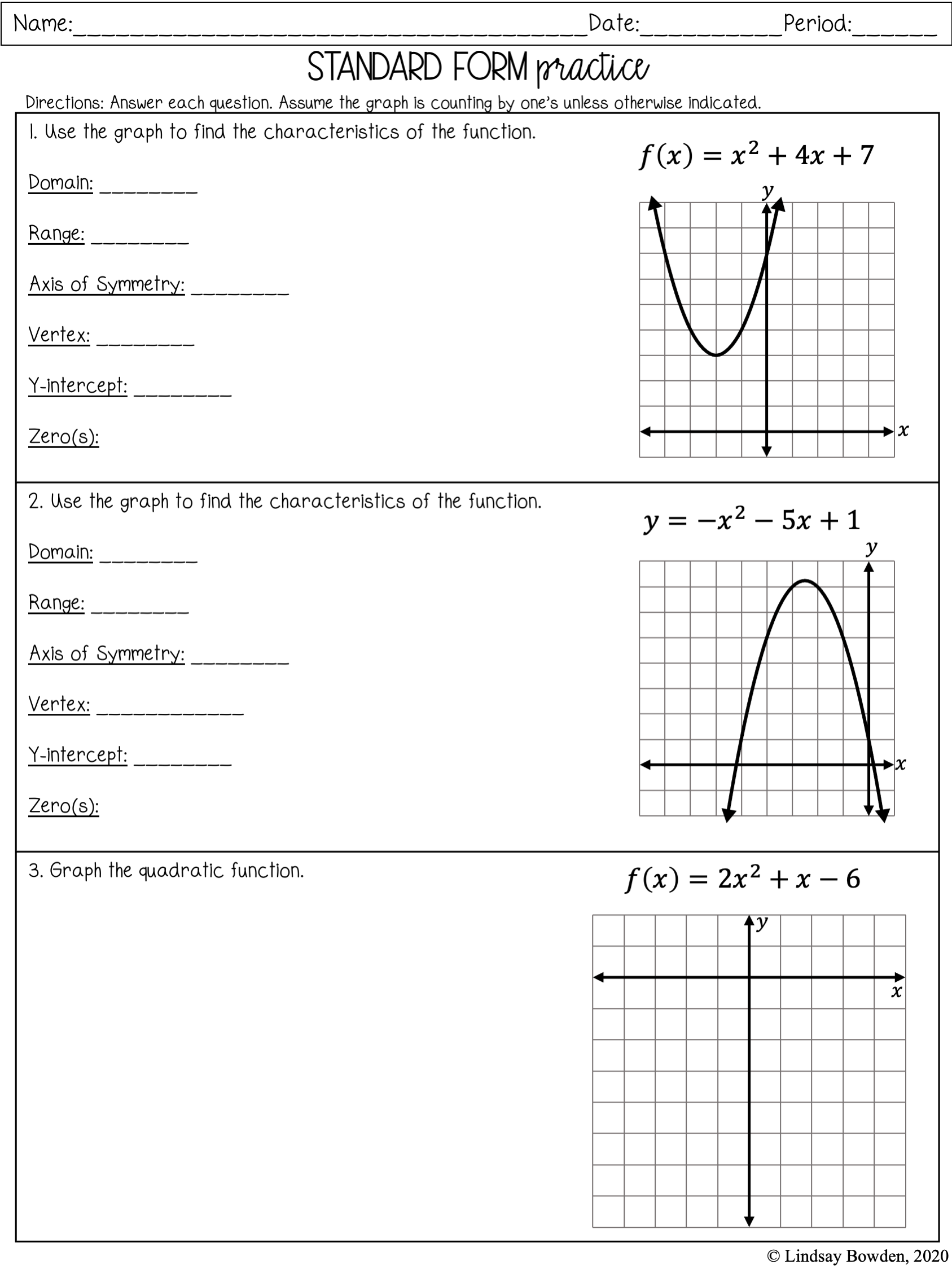
Graphing Quadratics Notes And Worksheets Lindsay Bowden Worksheets Library
Understanding Quadratic Equations
Understanding quadratic equations is the first step towards mastering their graphs. A quadratic equation in the form of ax^2 + bx + c = 0 represents a parabola when graphed. The coefficients a, b, and c determine the shape and position of the parabola. For instance, the coefficient a affects the direction and width of the parabola, while the coefficients b and c influence its position along the x-axis and y-axis, respectively. By manipulating these coefficients, one can alter the graph’s characteristics, making it essential to comprehend their roles.
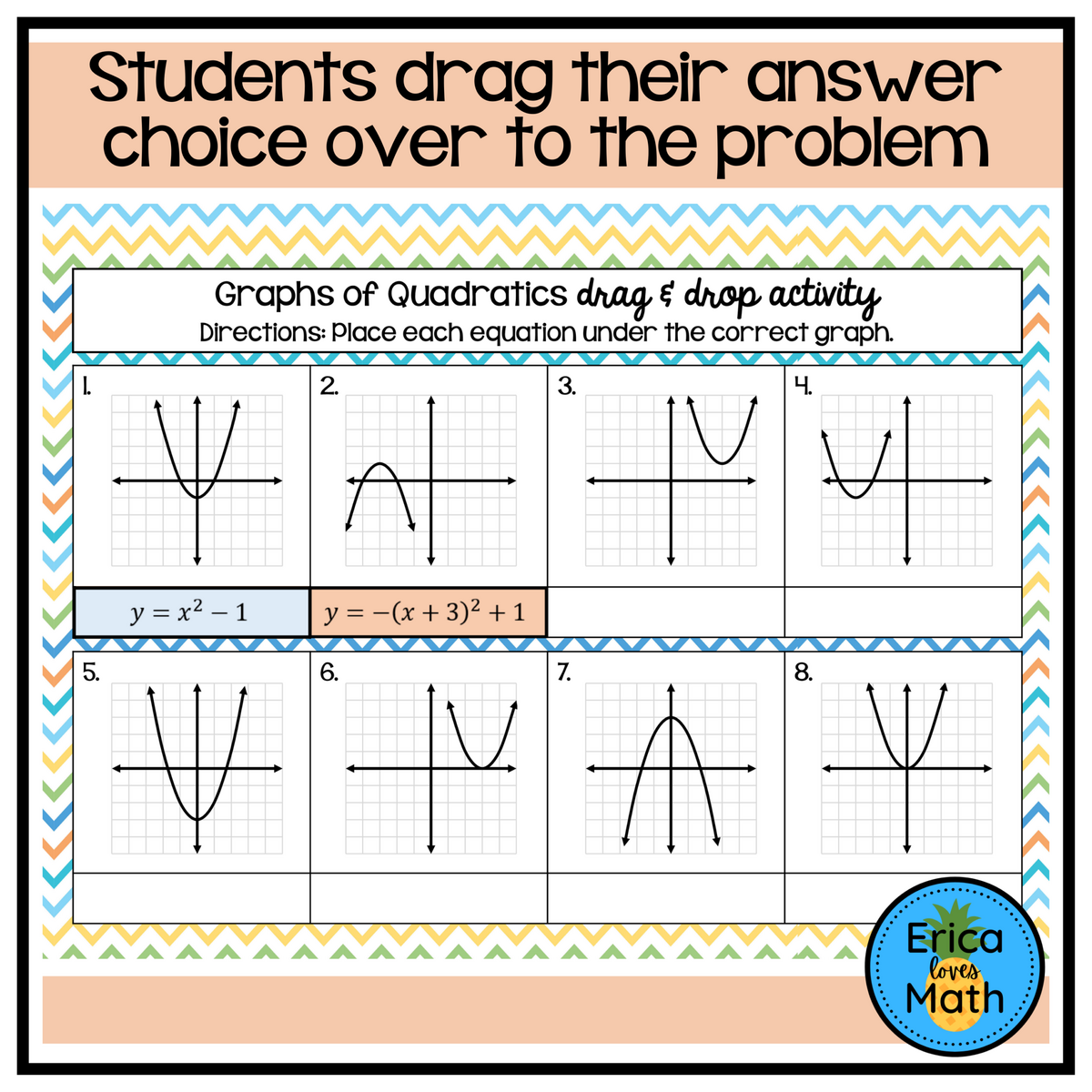
Graphs Of Quadratic Functions In Vertex Form Digital Drag Drop Activity Classful
The Importance of Vertex and Standard Forms
The importance of vertex and standard forms cannot be overstated. These forms allow for a more straightforward analysis of the quadratic function’s graph. The vertex form, in particular, simplifies the process of identifying the vertex and axis of symmetry, which are critical components of the graph. By expressing a quadratic equation in vertex form, one can immediately identify the vertex (h, k), which is the minimum or maximum point of the parabola, and the axis of symmetry, which is the vertical line x = h. This information is invaluable for graphing and analyzing quadratic functions.
Practicing with Printable Worksheets
Practicing with printable worksheets is an effective way to reinforce the understanding of graphing quadratics in vertex and standard forms. These worksheets provide a variety of exercises that cater to different learning needs, from basic graphing to more complex analysis of quadratic functions. By working through these exercises, students can develop their skills in converting between the standard and vertex forms, identifying key features of quadratic graphs, and applying this knowledge to solve problems. Moreover, printable worksheets offer the flexibility to practice at one’s own pace, making them an indispensable tool for learners seeking to master quadratic graphing.
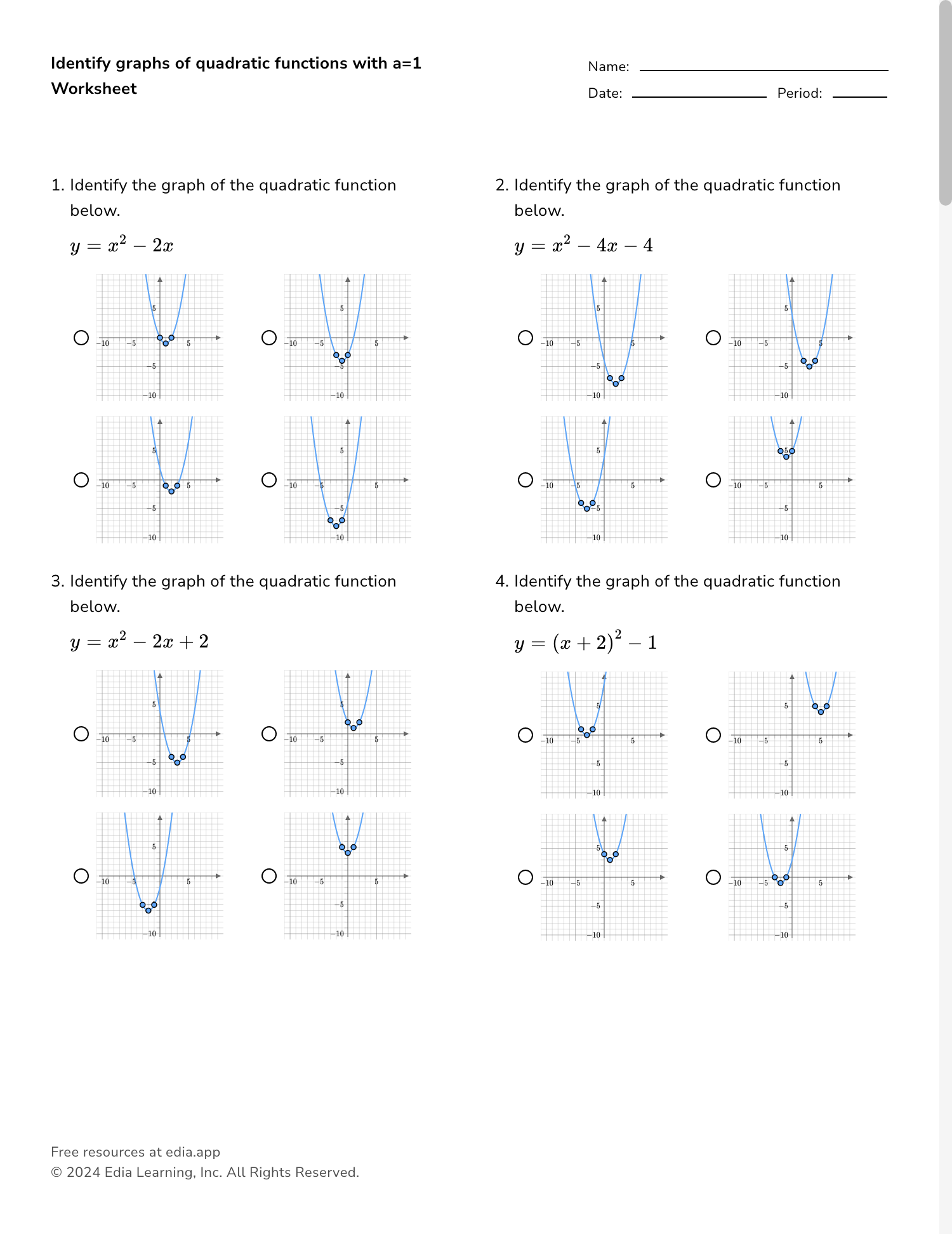
Edia AI Platform For Student Outcomes
In conclusion, mastering the art of graphing quadratics in vertex and standard forms is achievable with the right resources and practice. Printable worksheets play a pivotal role in this learning process, offering a structured and comprehensive approach to understanding and applying quadratic equations. By leveraging these resources and dedicating time to practice, students can overcome the challenges associated with quadratic graphs and develop a profound understanding of algebraic concepts. This foundation is not only crucial for academic success but also for unlocking the doors to more advanced mathematical and scientific disciplines.
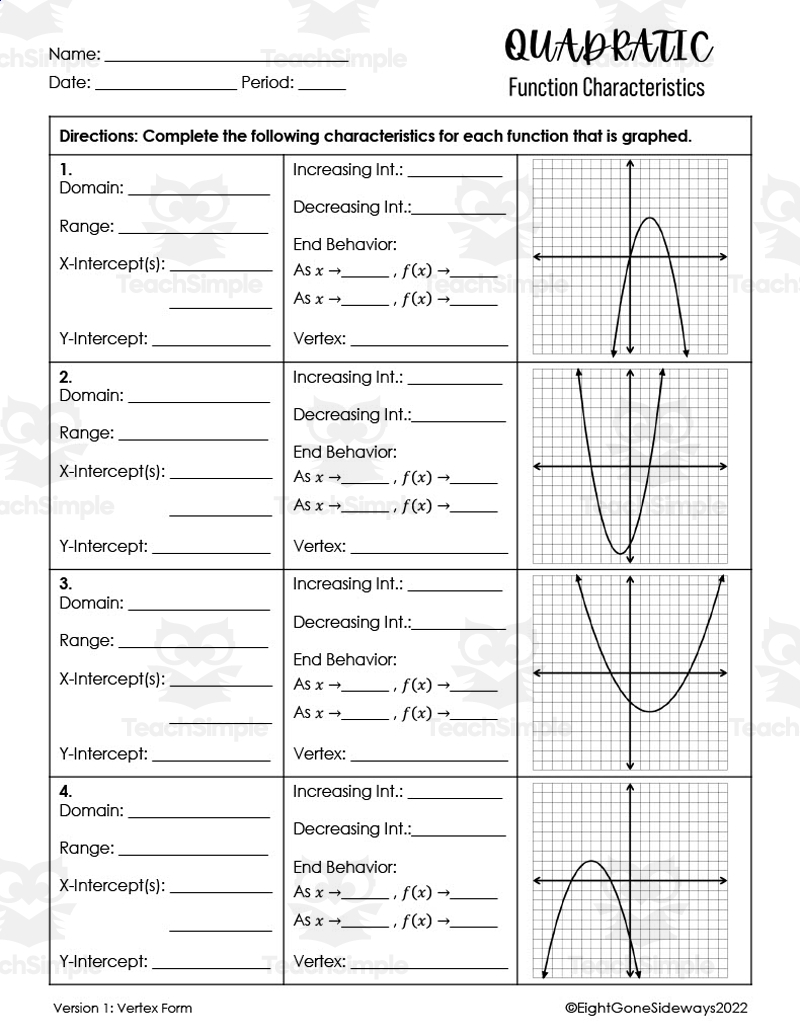
Quadratic Functions Vertex Form Worksheet By Teach Simple
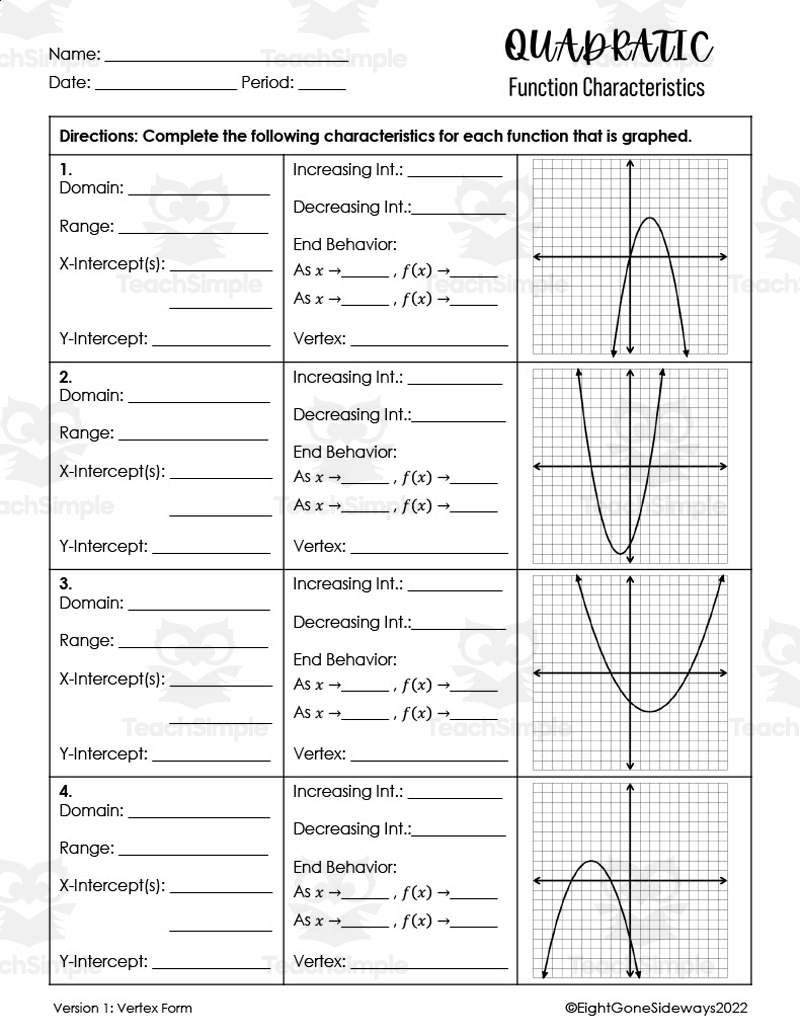
Quadratic Functions Vertex Form Worksheet By Teach Simple